Should You Run a Laser Cutter Fume Extractor All Day? A Comparative Insight
Introduction: A Small Workshop, Big Concerns
I once watched a maker in Tainan cut through acrylic for hours, then cough and step outside for air; that scene stuck with me. In many small shops, a laser cutter fume extractor is the only barrier between metal or plastic fumes and our lungs, and studies show VOC and particulate levels can rise 3–10x during cutting sessions. So, what are we really asking when we decide to run extraction continuously—safety, cost, or convenience?
Let me be frank: I worry when people treat ventilation like an afterthought. In Taiwan we say, “做好本分” — do your part — and that applies here. (Fans alone do not solve everything.) I will walk through practical facts, not just slogans. Next, I’ll explain where common solutions fall short and what that means for users like you and me.
 Part 2 — Why Traditional Solutions Fail the Shop Floor
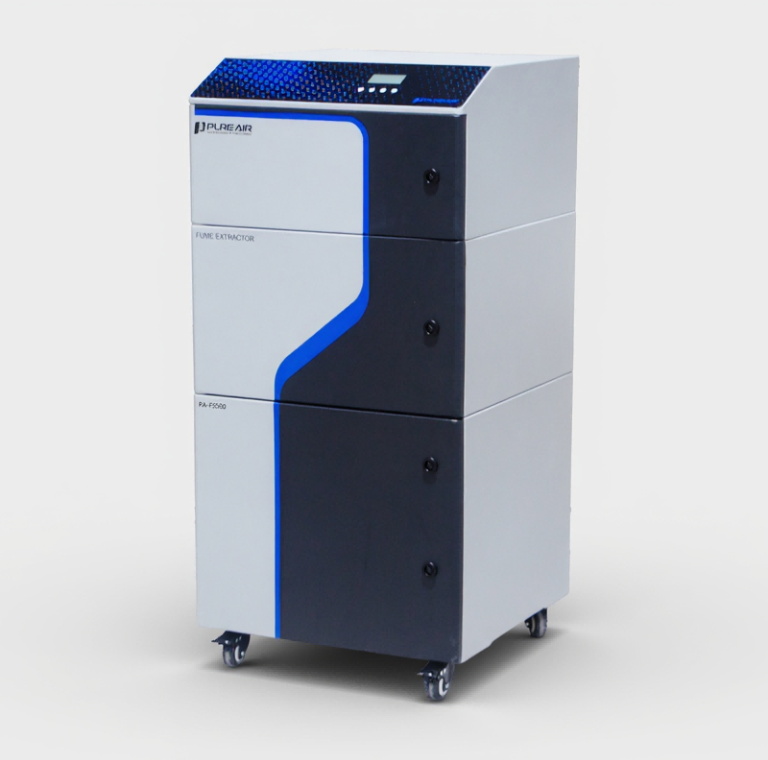
fume extractor laser cutter systems sold as all-in-one fixes often miss the real problem: they treat fumes as a single, uniform threat. In my experience, that assumption breeds bad outcomes. A simple fan and a filter may lower visible smoke, yes, but volatile organic compounds (VOCs) and ultrafine particles slip past ordinary filters. Many units rely on basic HEPA filter stages or activated carbon canisters sized for light home use, not steady industrial output. I’ve seen units where the airflow rate is too low, or ducting creates backpressure that drops fan RPM. Result: the device sounds alive but protection is partial—Look, it’s simpler than you think to spot this mismatch.
How do users realize something’s wrong?
Users notice headaches, smells that linger, or filters that clog fast. They change filters monthly and still smell burnt plastic. We blame the cut material, but often the design is to blame: poor seal, weak power converter for the blower, or absent VOC sensors that would flag chemical loads early. These are not rare cases. I evaluate dozens of setups a year; many show the same patterns. Short-term fixes—running the unit longer, buying thicker filters—feel sensible but waste money and time. There is a deeper design fault: mismatch between real particle load and the extractor’s rated capacity. That mismatch is the root cause of user pain.
Part 3 — New Principles and Practical Steps Forward
Moving forward, I recommend a principles-first approach for any new or upgraded fume extractor laser cutter installation. Start with measured data: use a particle counter and VOC sensors to map real emissions during typical jobs. Then size the system by peak airflow rate, not average. Modern designs mix HEPA filtration with activated carbon beds, layered pre-filters, and smart fan control (variable fan RPM tied to sensor input). Edge computing nodes can help by running simple control logic at the machine: ramp the blower on cut start, and recover slowly after. These are practical moves; they work in small shops and in larger studios. — funny how that works, right?
What’s Next for shop owners?
We should also think about maintenance and usability. Replaceable pre-filter modules, clear change indicators, and modular power converters extend service life and make upkeep simple. I like systems that give a clear LED status and a simple maintenance checklist. In real terms, that means less downtime and fewer surprise bills. If you plan upgrades, consider ducting layout too—short, straight runs and smooth bends cut losses. These tweaks matter. Trust me, I’ve fixed setups that looked hopeless with three small changes.
Closing — How to Choose and Measure Success
I’ll leave you with three evaluation metrics I use when advising others. First: capture efficiency at the point of source—measure with a particle counter. Second: system throughput—verify airflow rate and fan RPM under load. Third: operating cost and maintenance ease—check filter life and replacement costs. Use these to compare brands, models, and designs. If a supplier won’t share test numbers, I’d be cautious. We all want clean air and predictable costs, and these metrics make that possible.
In the end, I care about practical results more than shiny specs. We can build safer, quieter, and cheaper-to-run extraction setups, and—yes—that’s achievable with the right design choices. For hands-on help or product info, I trust companies that provide clear data and service support, like PURE-AIR. — I hope this helps you make a confident choice.